


One of my clients lost her husband late last year.
She told me how grateful she was for all the time they shared.
Then she paused and said she just wished they’d had more.
Not more money.
More time.
I’ve experienced many different versions of that moment throughout my career…
With clients who received a difficult diagnosis, lost someone they loved, or watched a friendship quietly disappear.
In almost every case, the thing they were left wanting wasn’t money.
Here’s the reality: you can almost always make more money.
You might need to work longer, adjust your lifestyle, or change your plan. But there’s a way.
But time spent is gone forever.
Think of your life as an hourglass.
Each grain of sand that passes through represents a moment, a day, a week.
Once it falls, it’s gone.
Oliver Burkeman makes this concrete in his book 4,000 Weeks.
The average human life spans about 4,000 weeks.
When you consider your life in weeks rather than years, it feels both smaller and more precious at the same time.
I believe it’s a useful context.
How many weeks do you have left?
It’s worth sitting with. And thinking about.
Here’s the idea: most of us spend decades planning our financial futures and retirement with remarkable care and discipline.
But we spend very little time — and almost no structured thought — on how we actually want to spend our time.
We plan our money meticulously. We plan our time almost not at all.
That’s backward.
Money is a tool.
It’s fuel for a life you’ve chosen.
And the life you choose — the people in it, the moments you create, the meaning you find — that’s all about how you spend your time.
A well-funded portfolio sitting alongside a life that hasn’t been thought about carefully is an opportunity waiting to be wasted.
I’ve written before about money being fuel for living, and about the big rocks in your life that deserve to come first before the smaller stuff crowds them out.
This is the same idea at its core.
Think about your time first. Then build your financial plan around that life — not the other way around.
Three questions worth sitting with
George Kinder, a pioneer in life-centered financial planning, developed three questions to help people strip away the noise and connect with what they actually want.
These aren’t casual questions. Take your time with them.
If all of your financial needs were already taken care of (imagine you have $100 million in the bank), how would you spend your time? Who would you be? What would you start doing — and, perhaps more importantly, what would you stop doing?
Your doctor tells you that you have five to ten years left to live. You’ll be healthy and capable until the very end, but you won’t know exactly when it will come. How do you spend those years? Where? With whom? What changes?
You go back for a second opinion and the news is worse. You have 24 hours left. What do you regret not having done? Not having said? Not having been?
Each question tightens the lens.
They move you from hypothetical to honest.
I’ve written before about Bronnie Ware — the nurse who spent years with people in the final weeks of their lives and recorded their most common regrets.
Not one person regretted not making more money.
They regretted not having lived more fully, loved more openly, and been more present with the people they loved.
Your hourglass is running.
And that’s not a warning — it’s an invitation.
I’m not asking you to abandon financial planning or to spend recklessly.
I’ve written recently about the cost of playing it safe, and the value of being prepared and thoughtful so that you can enjoy your life — today, not just someday.
Today and tomorrow both matter.
The point isn’t to ignore money. It’s to make sure the money serves your unique and precious life, not the other way around.
The best financial plan isn’t the one with the biggest number at the end.
It’s the one that gives you the freedom to spend your time the way you actually want to spend it.
Bottom line: Money matters.
You’ve worked hard for it, and it opens real doors. But it’s worthless without time to spend and enjoy it — and without intention about how to spend it.
Take some time to sit with those three questions.
Think about your relationship with time, not just your relationship with money.
And if you’d like to have that conversation together, I’d welcome it.
That’s what this work is really for.
Reach out anytime.
Links & things
Want some help with spending your time?
Here are a couple of free worksheets to help you think this through:
There are lots more of these types of worksheets to be found online for free if these don’t strike a chord with you.
And whether you’re in the midst of your career or already retired, this is an important and valuable exercise to go through. Give it a try!
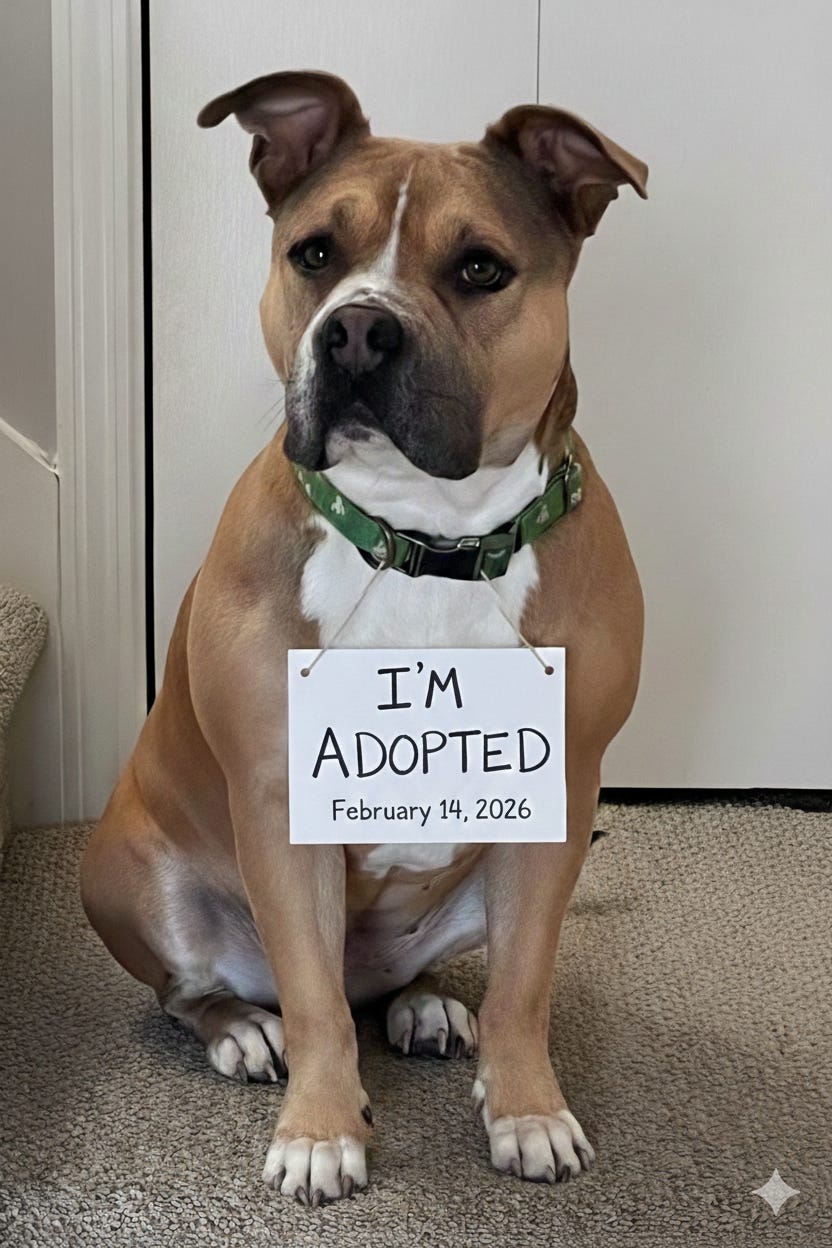
A few weeks ago, I wrote about our foster pup, Zilly.
Well she’s no longer our foster as we adopted her and officially welcomed her to our family on Valentine’s Day:
Elizabeth stumbled across this on Instagram and shared it with me:
In case you know any burned-out Gen Z folks (ages 14-29) that need to relax and get away from it all, there’s apparently a “youth retirement home” built just for them in Malaysia.
According to the Instagram post, the facility is already fully booked.
Thank you for reading!
If you’re not a client and would like my advice, simply reply to this email with your questions and I’ll be happy to respond with my thoughts…
Until next Wednesday,
Russ